
Key facts
- The U.S. Army is scheduled to detonate a stockpile of lead azide Monday in Middletown, Iowa.1
- Lead azide is a compound of lead and nitrogen, used to make bombs.2 It is a highly sensitive explosive and a lead compound.3 The explosion is expected to create a dust plume containing lead that may cross into Illinois.1
- About 5 tons of lead azide will be blown up Monday.1 The procedure has received a green light from the U.S. Environmental Protection Agency regional office in Kansas City.1 The regional EPA office in Chicago oversees environmental protection in Illinois.1
The U.S. Army is scheduled to detonate a stockpile of lead azide Monday in Middletown, Iowa, about 80 miles southwest of the Quad Cities.1
The Army moved the planned explosion from Friday to Monday after politicians from Iowa and Illinois asked for a delay..1 The environmental organization Earthjustice also sued to try to pause the detonation.1
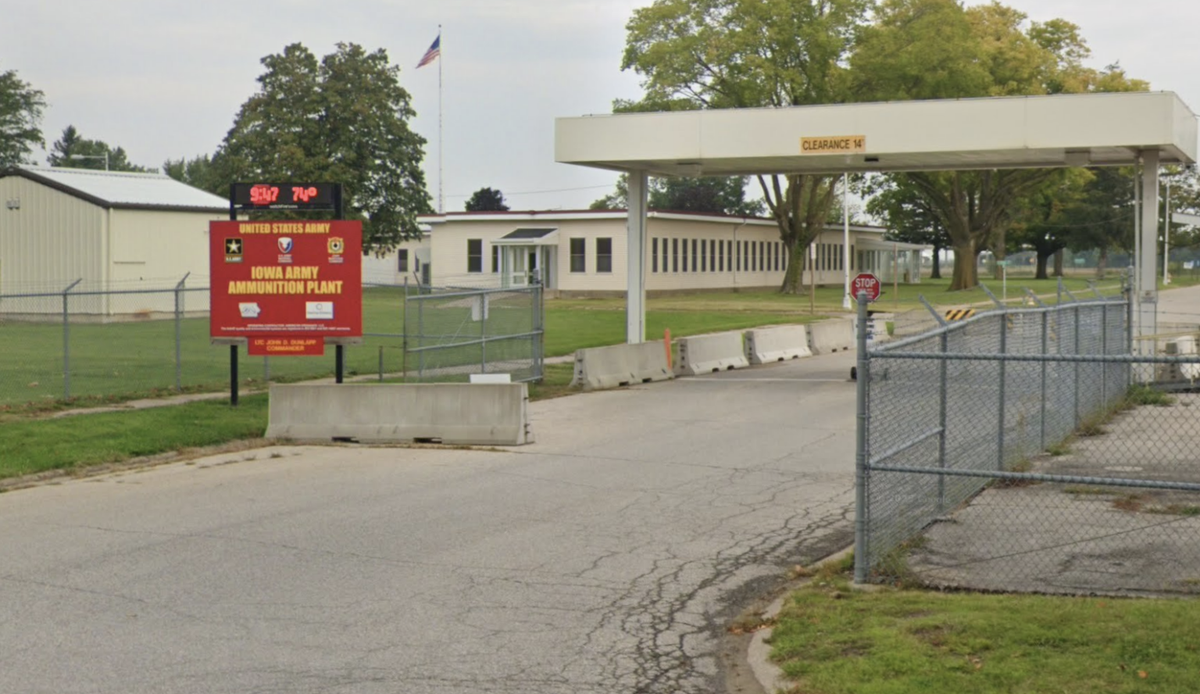
The detonation is expected to take place at the Iowa Army Ammunition Plant in Middletown, Iowa..1 The plant is around 80 miles southwest of the Quad Cities and only about 10 miles west of rural Illinois communities just across the Mississippi River.1
Army Spokesperson on the Detonation
Lori McFate, public affairs specialist with the Army Sustainment Command in Bettendorf, Iowa, said, “We detonate all the time, but we have not detonated lead azide at this quantity.”1
McFate said the explosion will take place after months of planning..1 The Army has never blown up such a large amount of lead azide, according to a spokesperson.1
Lead Azide and Health Risks
Lead azide is a compound of lead and nitrogen, used to make bombs..2 It is a highly sensitive explosive and a lead compound..3 The explosion is expected to create a dust plume containing lead that may cross into Illinois.1
Lead is toxic to humans and animals, and the EPA says there is no safe level of lead exposure..1 Lead is a neurotoxin that damages the central nervous system, and exposure is associated with cognitive delays, heart problems and reproductive issues.1
Patrick O’Shaughnessy, a professor at the University of Iowa and an expert in environmental health, said the potential lead-carrying plume is among some of the top concerns.4 O’Shaughnessy said, “We inhale things that may get into our bodies; we ingest things, get into our gut. And we have the ability to have a dermal absorption of things that we touch.”4
Robert Hirschfeld, director of water policy at the Prairie River Network, a Champaign-based environmental advocacy group, said, “Lead is an element, and doesn’t break down.”1
Detonation Details and Safety Measures
About 5 tons of lead azide will be blown up Monday..1 The procedure has received a green light from the U.S. Environmental Protection Agency regional office in Kansas City..1 The regional EPA office in Chicago oversees environmental protection in Illinois.1
Illinois EPA officials say based on current air modeling conducted by the U.S. Army, the dust cloud from the detonation could come close to Mercer County in Illinois..1 The Army will update its models prior and following the detonation, which could change what Illinois communities might be affected.1
Federal officials are installing air monitors and will conduct further environmental sampling of the blast area..1 The Army has shared the potential plume’s path..4 Updated maps will be available online.2
Residents and Schools
One neighborhood of Middletown is being asked to temporarily vacate the area from 8 a.m. to 2 p.m. on Friday..2 The Armed Forces Reserve Center in Middletown is open to residents who need a place to go during the detonation.2
Some schools have already canceled classes on Nov. 21 in anticipation of the lead azide detonation.3