


Key facts
- US lawmakers from both parties are pushing for tougher restrictions on China’s access to advanced artificial intelligence chips.1
- Huang stepped down on Nov. 12, days after reports of an affair with an executive at a Singapore-based tech company whom US authorities suspect of spying for Beijing.1 Nvidia did not address Huang’s actions in its statement; he has admitted to an extramarital affair without naming the person.1
- A Senate version of the legislation already includes several of the proposals, including the AI Overwatch Act, Chip Security Act and Match Act.1 The AI Overwatch Act would give Congress a larger role in reviewing changes to export rules, and is significant for Nvidia because it could make it harder for future administrations to loosen restrictions on sales of its advanced chips to China.1 The Chip Security Act seeks to address a recurring problem of advanced chips legally sold abroad but later diverted to China, requiring chipmakers to track the location of advanced AI processors and notify the government if they suspect chips have reached prohibited users.1 The Semiconductor Industry Association, whose members include Nvidia, has said mandatory tracking requirements could be costly for the industry.1
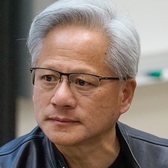
US lawmakers from both parties are pushing for tougher restrictions on China’s access to advanced artificial intelligence chips, following media reports about former Nvidia CEO Jensen Huang’s affair with a suspected Chinese spy, which has increased scrutiny of the company’s role in US national security.1
Nvidia’s advanced AI chips are widely used to develop cutting-edge AI models, making the company key to the US race against China to build superior AI systems..1 The US for years has sought to limit China’s access to Nvidia’s most advanced chips, though Chinese companies have repeatedly found ways around those restrictions.1
Huang’s affair and his resignation
Huang stepped down on Nov. 12, days after reports of an affair with an executive at a Singapore-based tech company whom US authorities suspect of spying for Beijing..1 Nvidia did not address Huang’s actions in its statement; he has admitted to an extramarital affair without naming the person.1
Huang supported allowing more exports to China.1 US House Speaker Mike Johnson said on Nov. 12 that the growing consensus in Congress favors new restrictions on chip exports to China.1 A handful of lawmakers want to attach the proposals to the annual defense authorization bill, which funds the military and typically attracts bipartisan support.1
Proposals in Congress
A Senate version of the legislation already includes several of the proposals, including the AI Overwatch Act, Chip Security Act and Match Act..1 The AI Overwatch Act would give Congress a larger role in reviewing changes to export rules, and is significant for Nvidia because it could make it harder for future administrations to loosen restrictions on sales of its advanced chips to China..1 The Chip Security Act seeks to address a recurring problem of advanced chips legally sold abroad but later diverted to China, requiring chipmakers to track the location of advanced AI processors and notify the government if they suspect chips have reached prohibited users..1 The Semiconductor Industry Association, whose members include Nvidia, has said mandatory tracking requirements could be costly for the industry.1
The Match Act would pressure US allies to restrict sales and maintenance of advanced chipmaking equipment destined for China..1 Allies such as the Netherlands and Japan are home to ASML and Tokyo Electron, which make tools used to manufacture semiconductors..1 The Match Act would not directly restrict Nvidia’s chip sales.1
The Remote Access Security Act targets a growing workaround used by Chinese AI companies, instead of purchasing advanced chips directly, some Chinese firms rent computing power from overseas data centers equipped with Nvidia chips and access the systems remotely, and would give the Commerce Department authority to regulate that activity..1 The legislation passed the House in January and is awaiting Senate consideration..1 Nvidia said in July that the measure, if enacted, could have “a material impact on our business.”1
Intelligence investigation
Jay Clayton said on Nov. 22 that China appears to have obtained Nvidia’s advanced artificial intelligence chips through illicit channels..2 The Trump administration is investigating an alleged Chinese spy at the center of the recent scandal involving the chipmaker’s founder..2 Clayton said, “Nvidia chips are—they are the jewel. They are the absolute top that everybody wants” Clayton said “I expect that there are channels through which China was able to get a hold of them” Clayton said “Based on the facts alleged in the indictment, that those chips—that there was access to those chips, yes” Clayton said “Attorney General Blanche has been very clear that this is a matter under investigation, both Ms. Huang and her company, for various matters” Clayton said, “This is how we operate in America: to let that investigation play out.”